

Glossary of elastomer processing
Semi-crystalline plastics
Semi-crystalline plastics are polymer materials that have both amorphous and crystalline regions in their molecular structure. These special properties arise during cooling from the melt, when some of the molecular chains arrange themselves in an ordered, crystalline state while others remain amorphous. This combination gives semi-crystalline plastics excellent mechanical stability, chemical resistance and good thermal properties.
Semi-crystalline plastics are characterised by a number of specific properties:
-
High strength: the crystalline regions give the material mechanical stability and hardness.
-
Low tendency to creep: thanks to the crystalline structures, deformation under load is minimal.
-
Thermal resistance: they can be used at higher temperatures than amorphous plastics.
-
Good chemical resistance: resistant to oils, solvents and chemical attack.
-
Lower transparency: because the crystalline regions scatter light, semi-crystalline plastics are usually opaque.
Semi-crystalline plastics consist of two different regions:
-
Crystalline regions: here the polymer chains are regularly and densely packed, resulting in high strength and resistance.
-
Amorphous regions: these disordered structures provide the material’s flexibility and elasticity.
The degree of crystallinity, i.e. the proportion of crystalline structures, has a decisive influence on the properties of the material. Higher crystallinity leads to greater hardness and chemical resistance, while lower crystallinity increases flexibility and impact strength.
There is a wide range of semi-crystalline plastics used in industry:
| Plastic | Properties | Typical applications |
|---|---|---|
| Polyethylene (PE) | Good chemical resistance, high toughness | Packaging, containers |
| Polypropylene (PP) | High heat resistance, easy to process | Car parts, pipes, textiles |
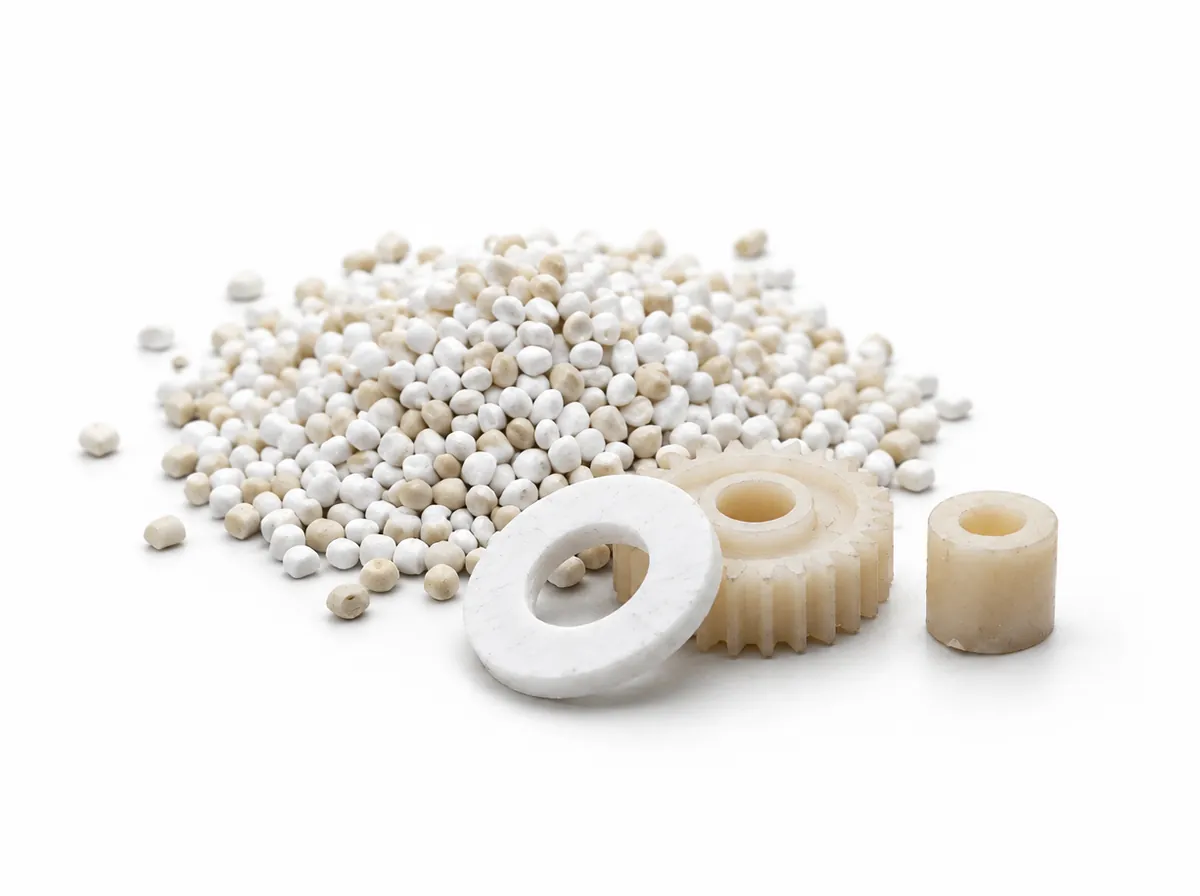
| Polyamide (PA) | High strength, good wear resistance | Gears, bearings, technical components |
| Polyoxymethylene (POM) | High stiffness, low friction | Mechanical precision parts, gears |
| Polyethylene terephthalate (PET) | High dimensional stability, good barrier properties | Bottles, packaging, technical films |
Processing semi-crystalline plastics requires precise control of cooling and processing temperatures to achieve the desired degree of crystallinity:
1. Injection moulding
Used to manufacture complex components that require precision and mechanical stability.
2. Extrusion
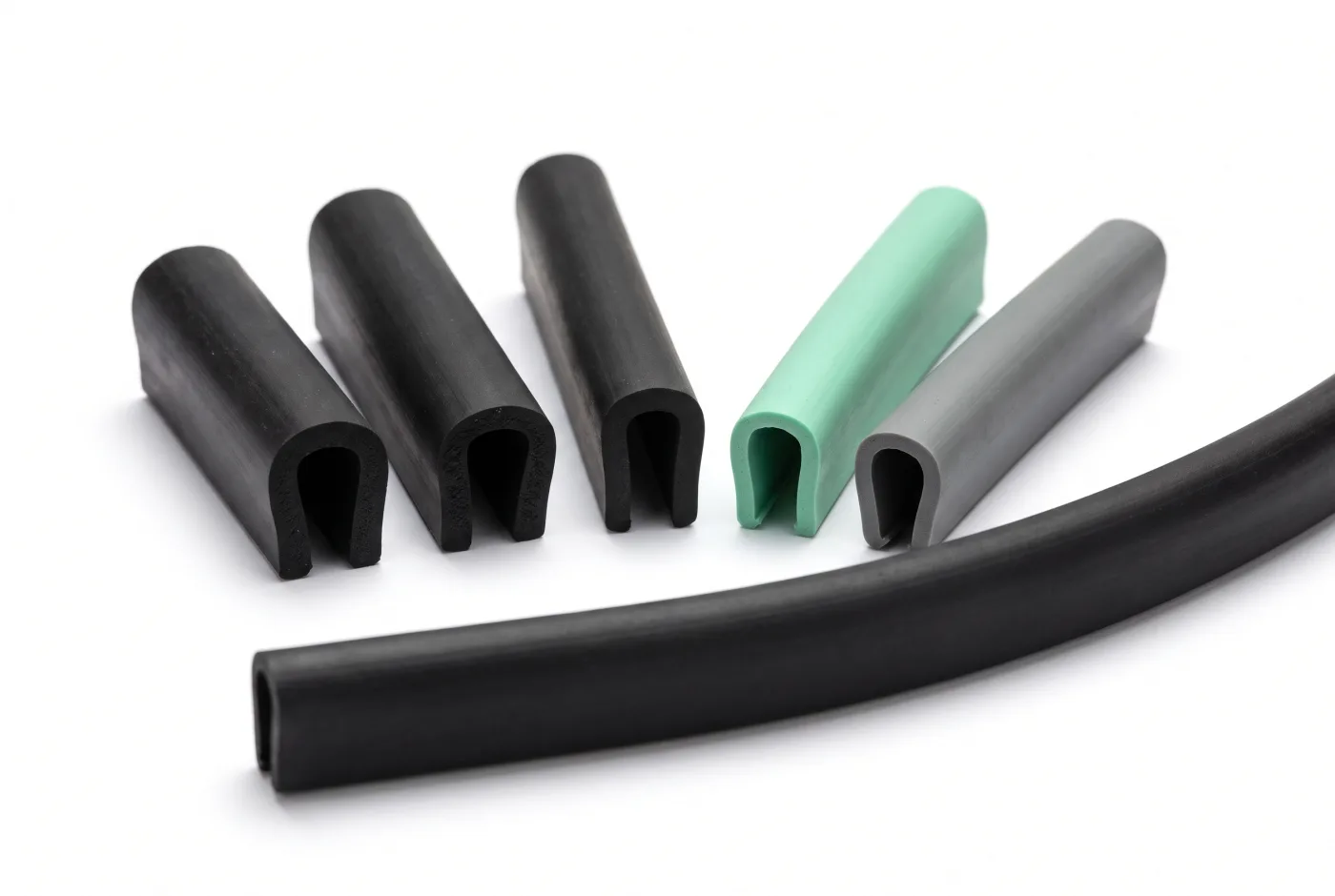
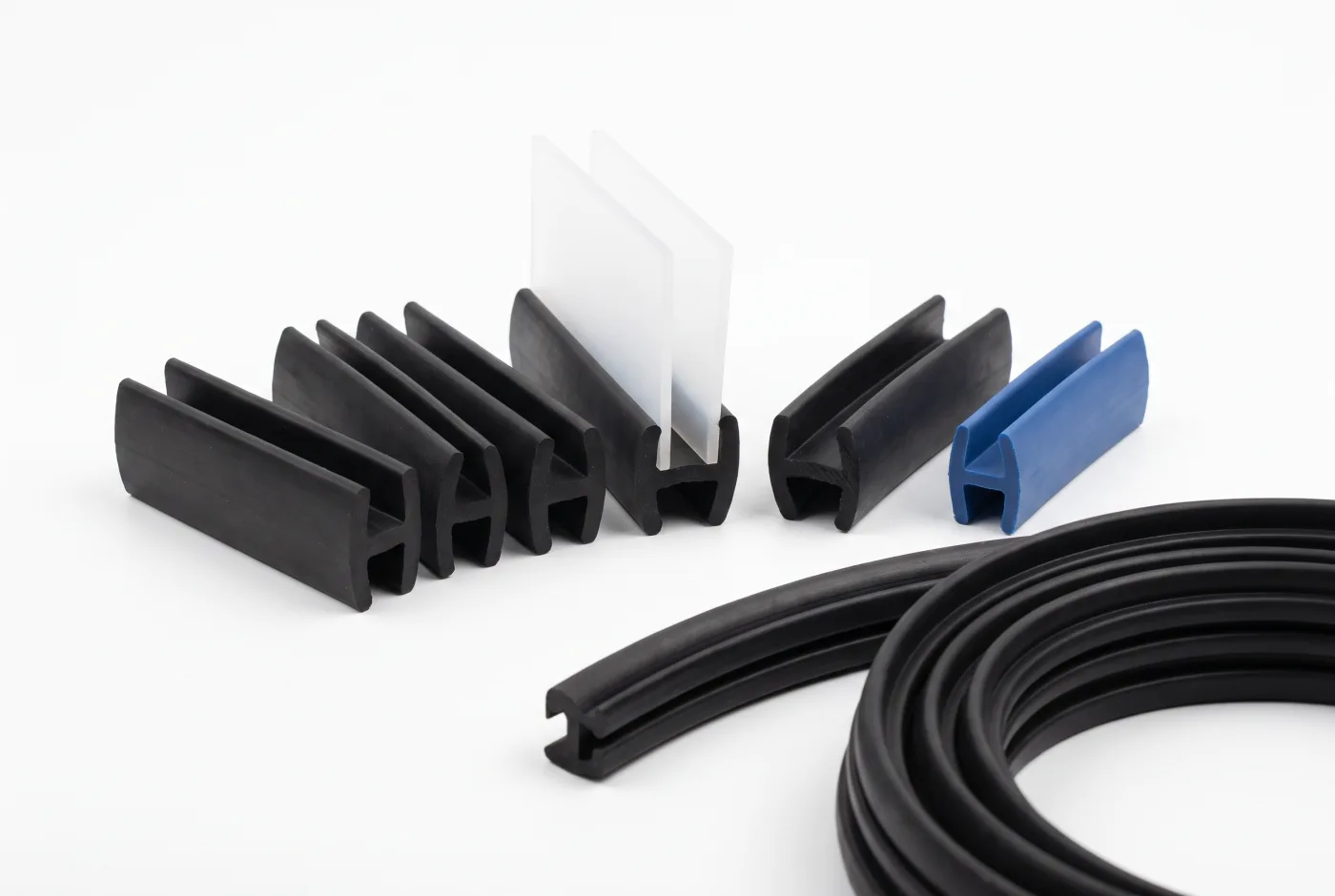
Suitable for the production of pipes, profiles and films.
3. Thermoforming
Used for packaging products such as containers or blisters.
Semi-crystalline plastics are widely used in many industries:
Automotive industry
-
Technical components: gears, housings and bearings.
-
Trim: high-strength, heat-resistant interior and exterior trim.
Medical technology
-
Device components: sterilisable, chemically resistant components.
-
Implants: use in technical applications such as surgical instruments.
Construction industry
-
Pipes: chemically resistant, durable piping systems.
-
Insulating material: use in facade elements and insulation systems.
Packaging industry
-
Food packaging: PET barrier films for longer shelf life.
-
Beverage bottles: PET bottles thanks to their stability and transparency.
The special properties of semi-crystalline plastics offer numerous advantages:
-
High mechanical stability: ideal for load-bearing components.
-
Wide operating temperature range: suitable for demanding applications.
-
Chemical resistance: resistant to aggressive media.
-
Longevity: high resistance to wear and ageing.
Despite their advantages, there are some challenges:
-
Processing: precise control of temperature and cooling is necessary to achieve optimum properties.
-
Brittleness: high crystallinity can lead to brittleness.
-
Costs: higher costs than amorphous plastics in certain applications.
-
What distinguishes semi-crystalline from amorphous plastics? Semi-crystalline plastics have crystalline and amorphous regions, while amorphous plastics have completely disordered structures.
-
What advantages do semi-crystalline plastics offer? They are mechanically more stable, chemically more resistant and more heat-resistant than amorphous plastics.
-
In which industries are semi-crystalline plastics used? The automotive, packaging, construction and medical technology sectors benefit from their versatile properties.
-
Can semi-crystalline plastics be recycled? Yes, many semi-crystalline plastics such as PET or PE can be recycled and reused.
Semi-crystalline plastics combine the mechanical advantages of crystalline regions with the flexibility of amorphous structures. Their versatility makes them a preferred material in numerous industries, particularly where stability, chemical resistance and longevity are required. Despite some challenges, semi-crystalline plastics remain indispensable materials in modern manufacturing and technology.
Questions about this term?
Our technical advice
Do you have a specific application or a question about elastomer processing? Talk to us, we will help you with material, process and approval.