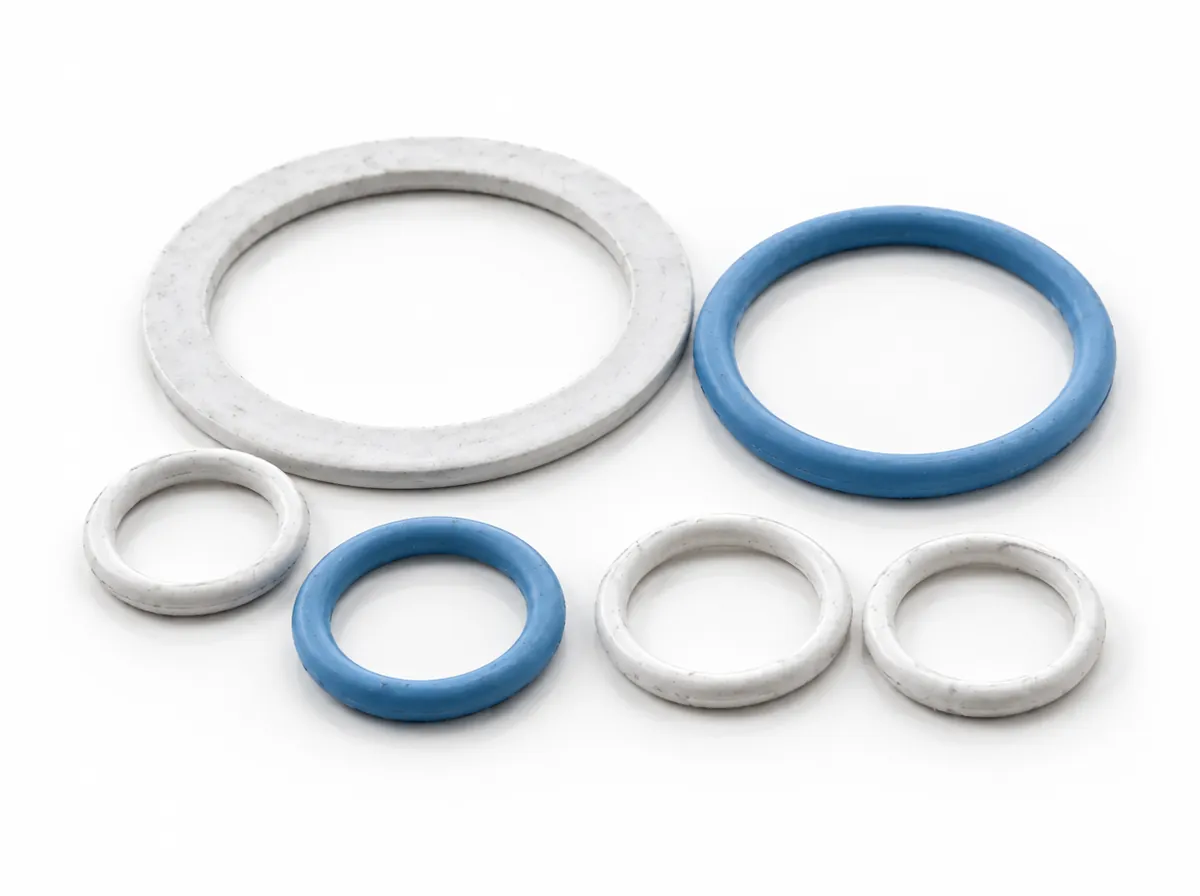
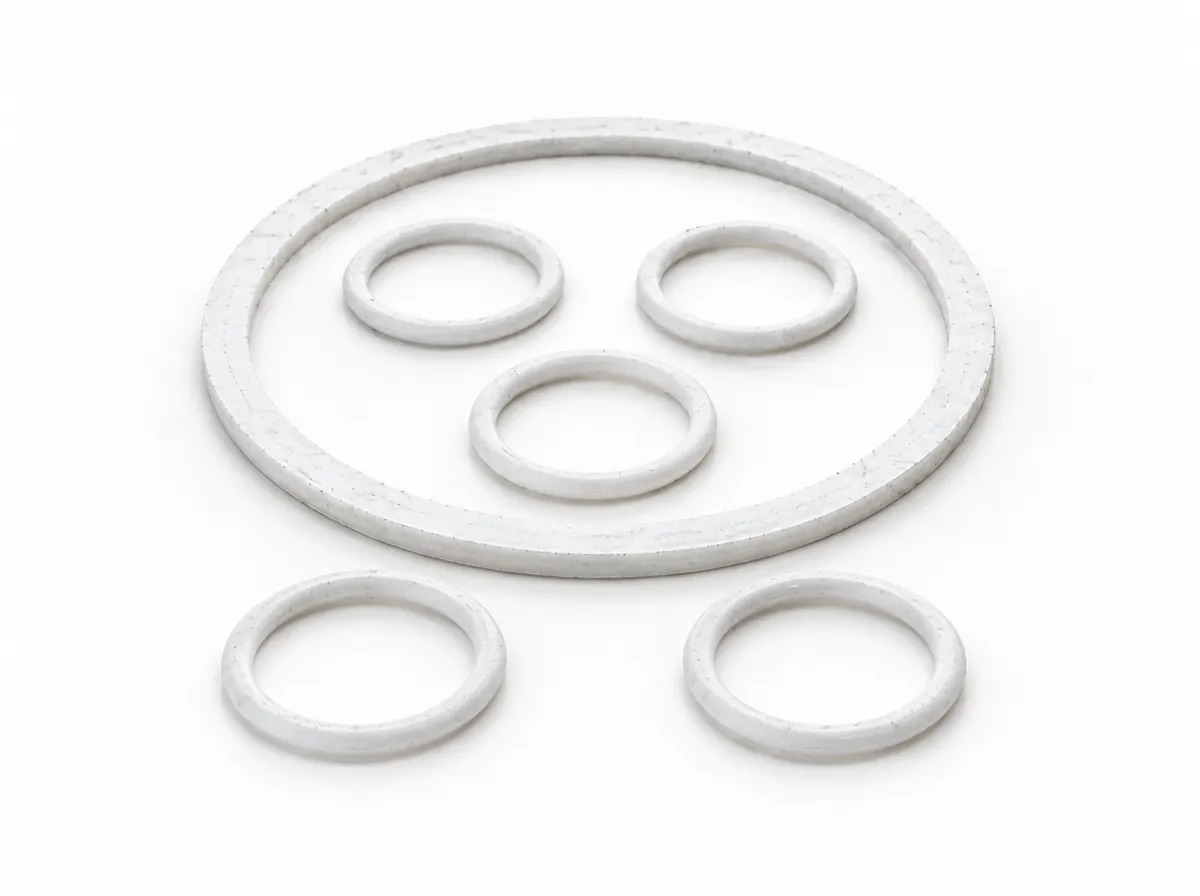
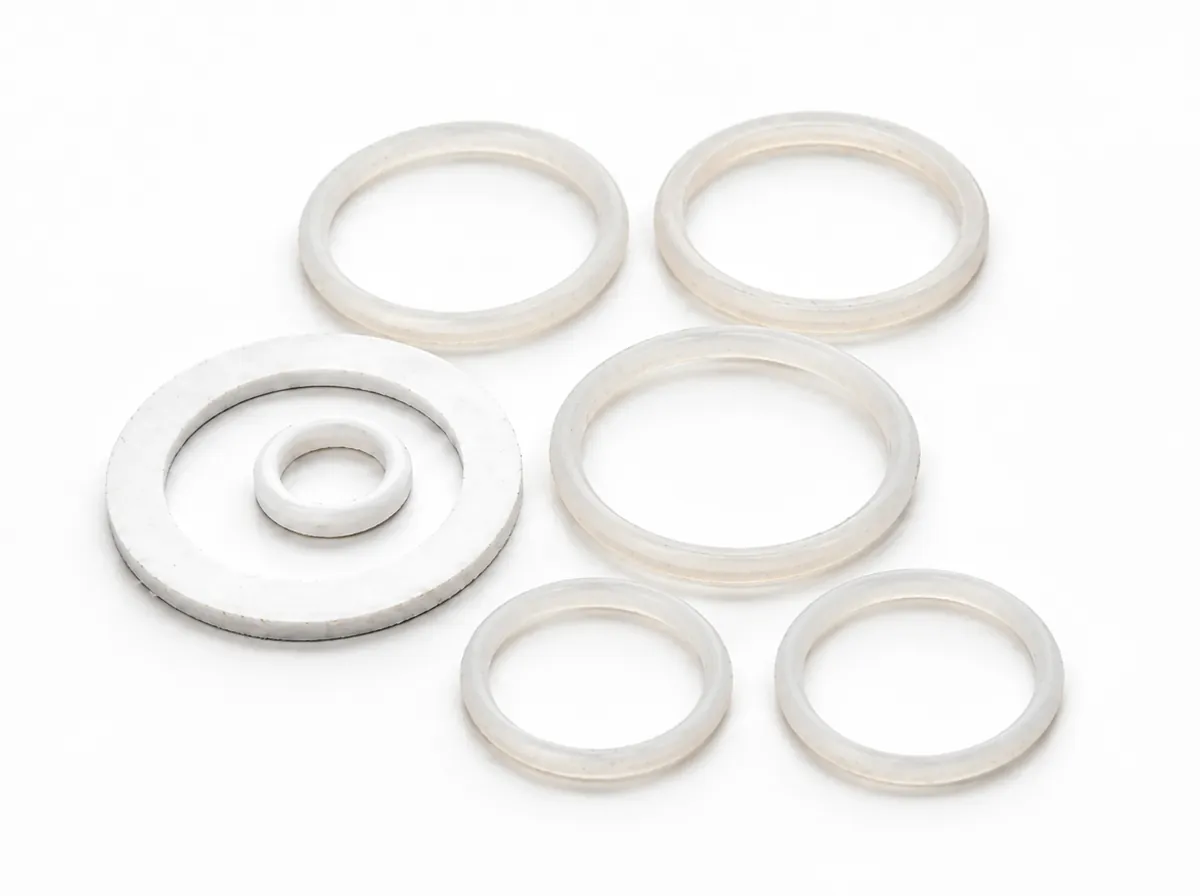
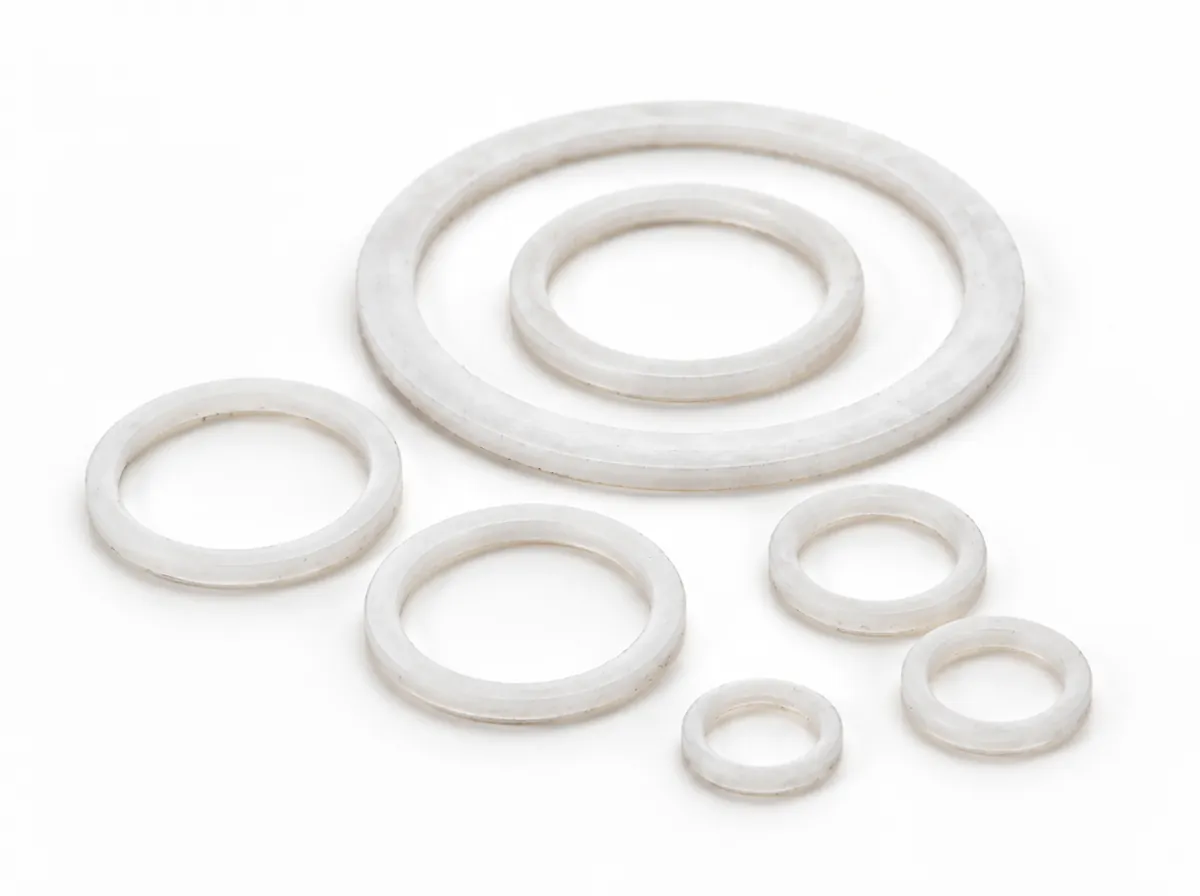





Material properties of graphite
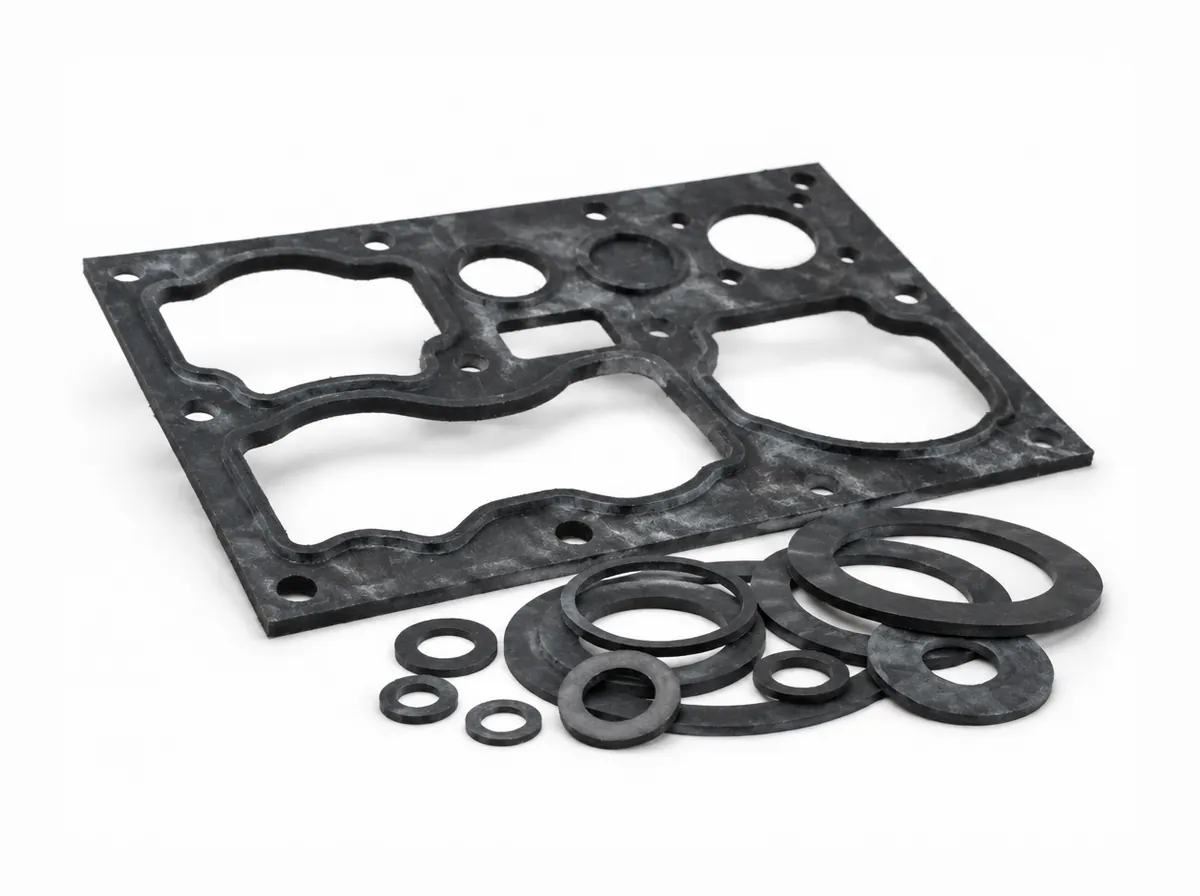
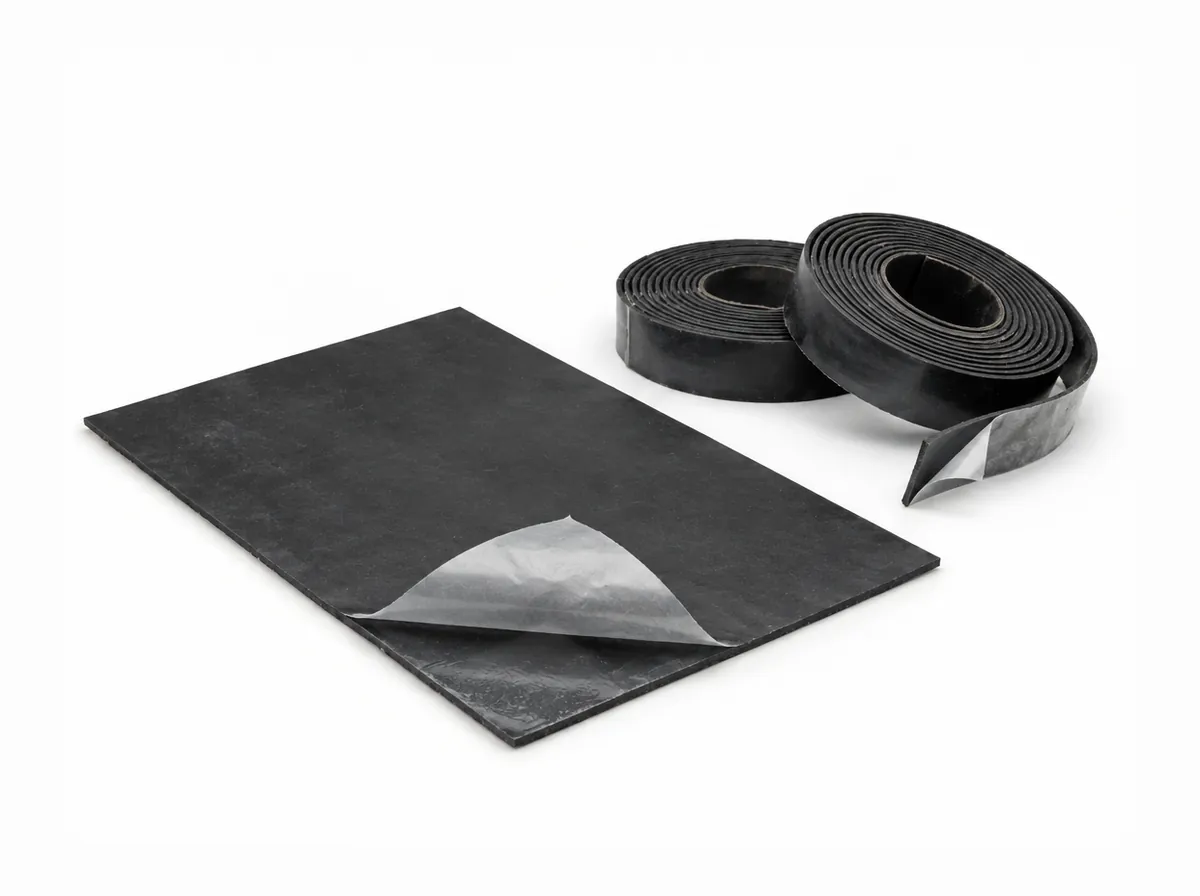
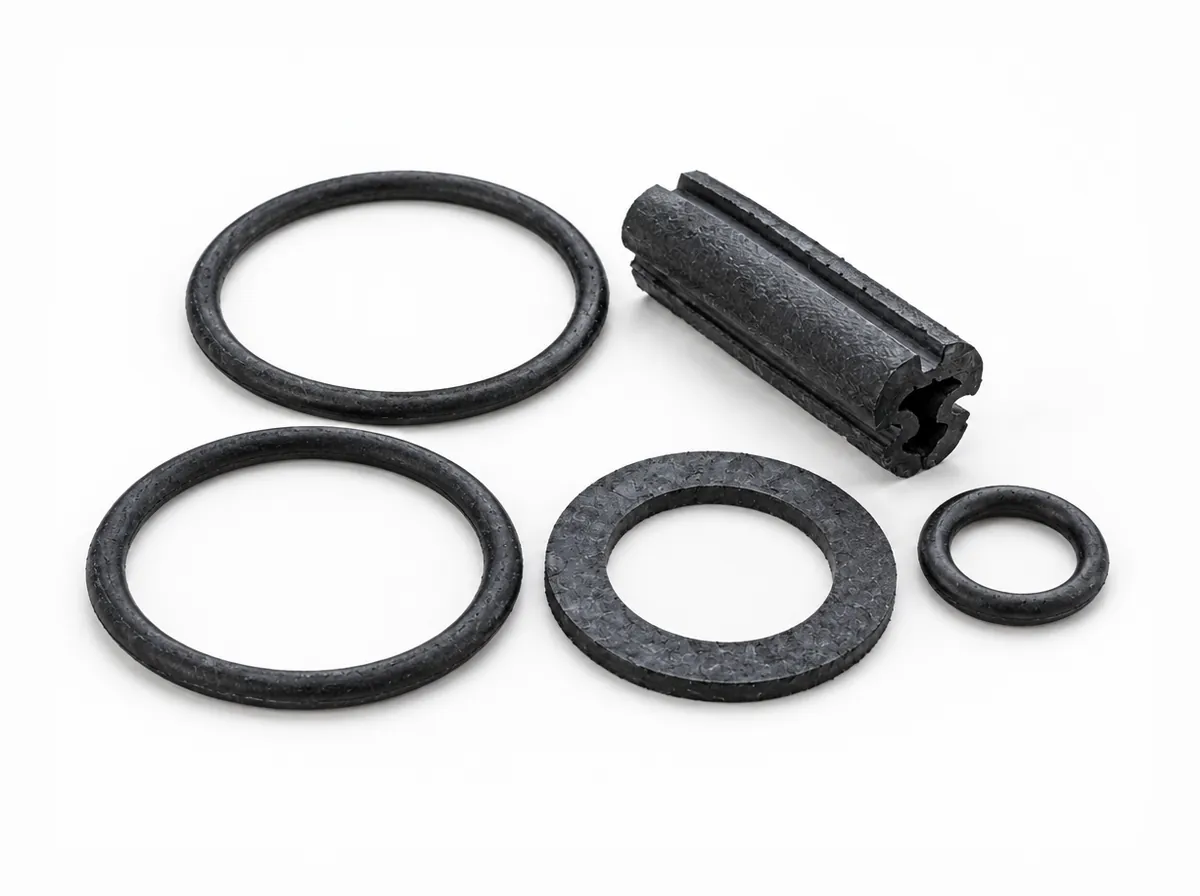
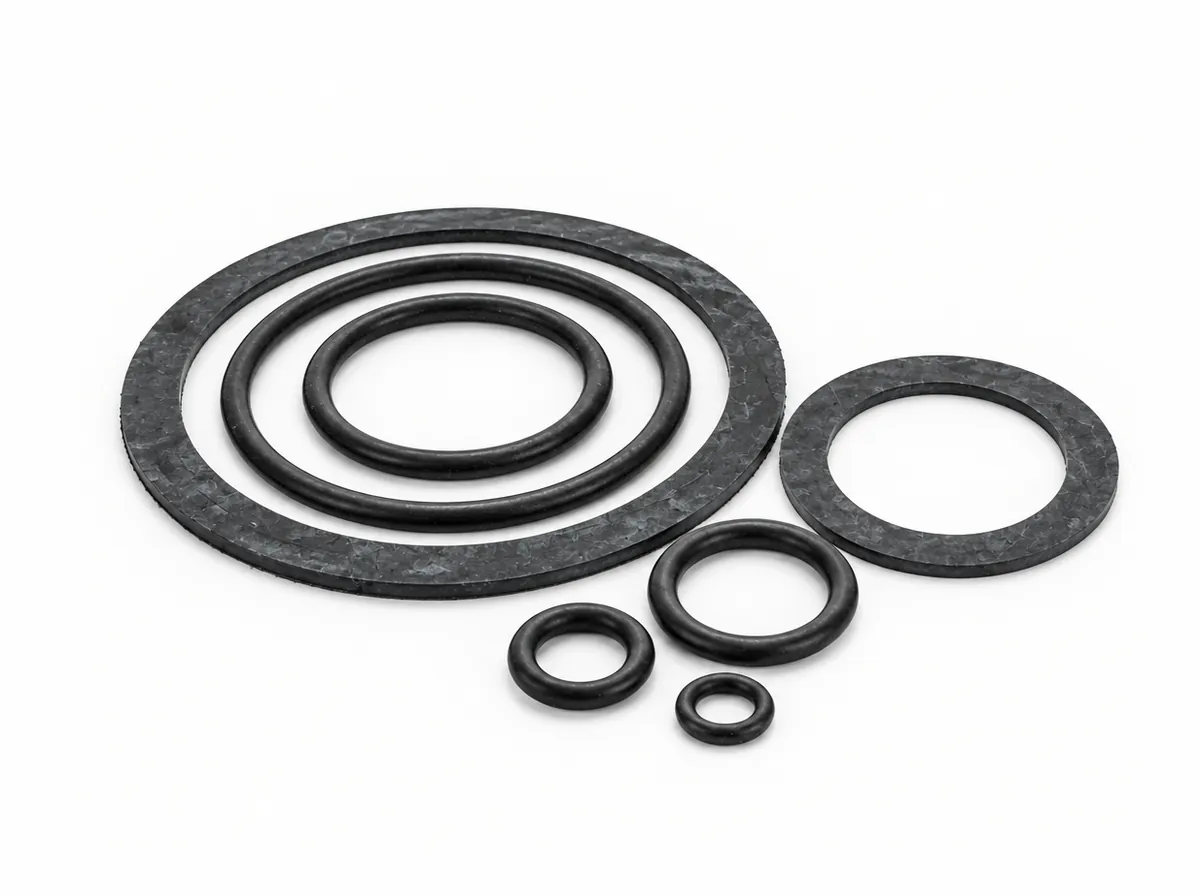
Graphite is an extremely heat-resistant material characterised by outstanding physical and chemical properties:
-
Temperature resistance: In sealing applications, graphite can generally withstand temperatures of up to 1000 °C, which makes it ideal for high-temperature applications.
-
High chemical resistance: Graphite is resistant to most chemicals, including acids, alkalis and organic solvents.
-
Low density: The low density of graphite makes it easier to adapt to irregular flange surfaces.
-
Flexibility: Graphite seals compress easily to achieve an excellent sealing effect, even with low bolt forces.
-
Conductivity: Graphite has high thermal and electrical conductivity, which makes it indispensable in certain technical applications.
Material properties of EPDM
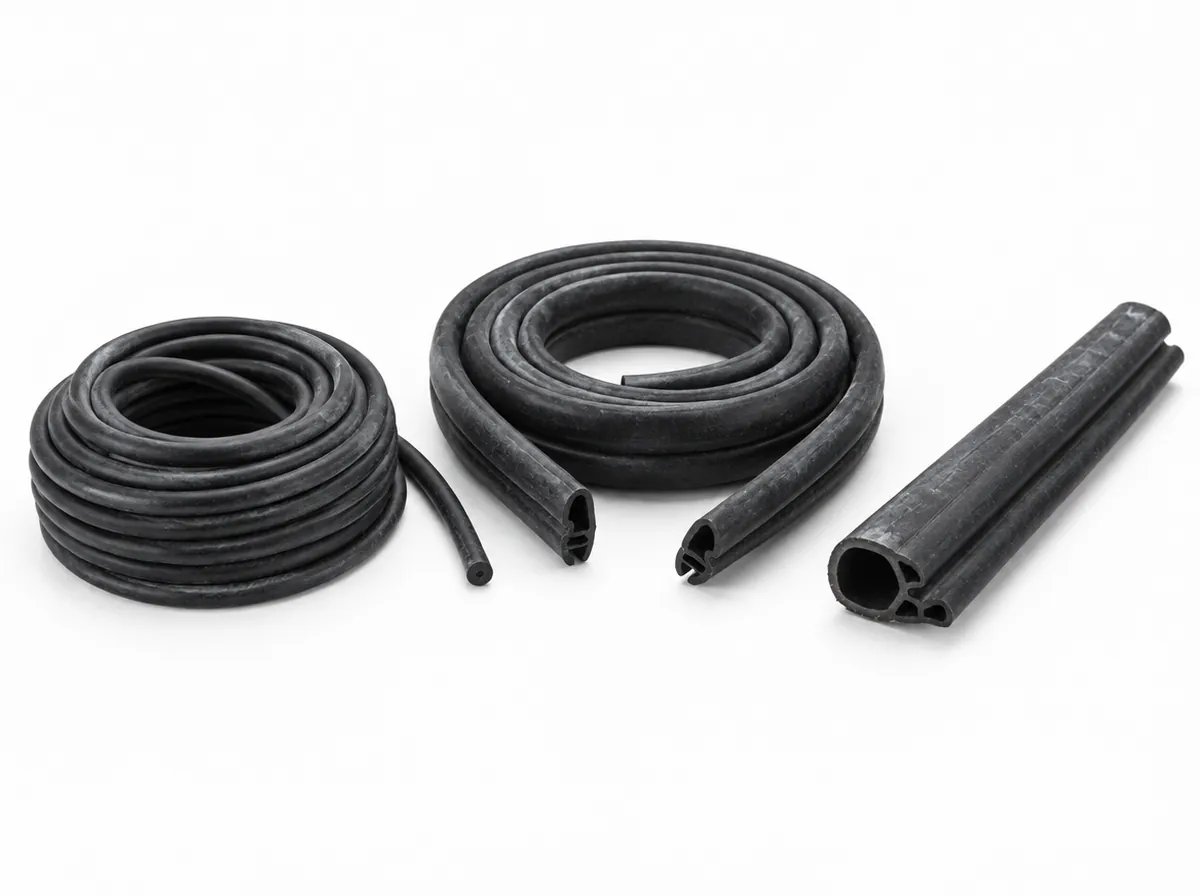
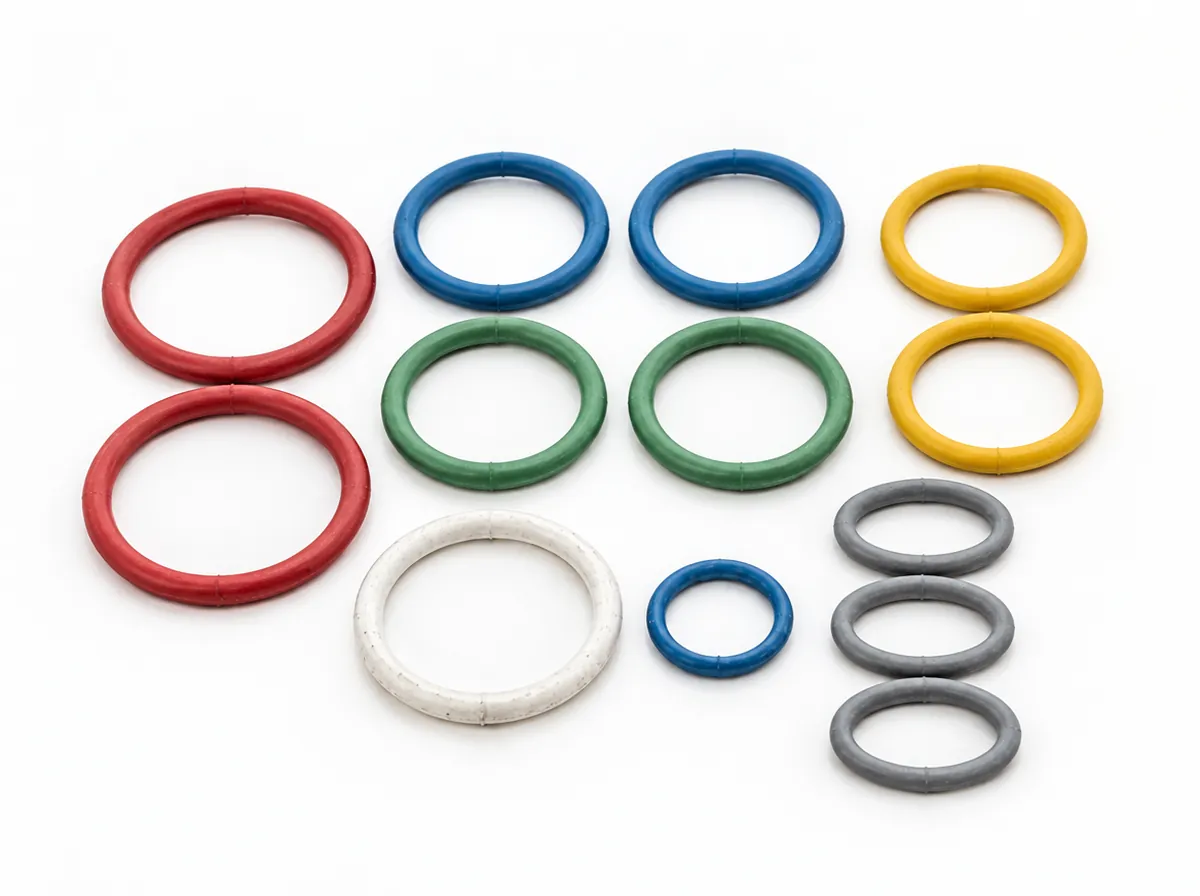
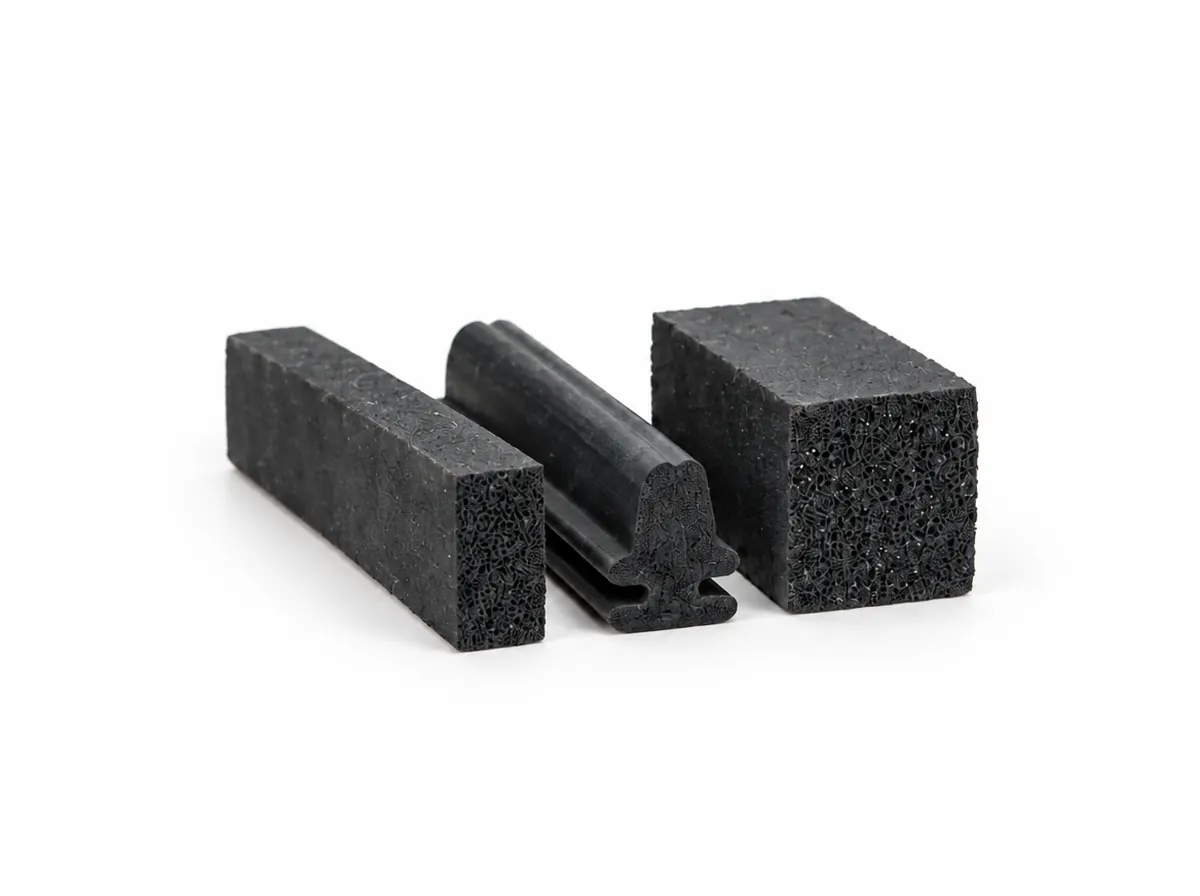
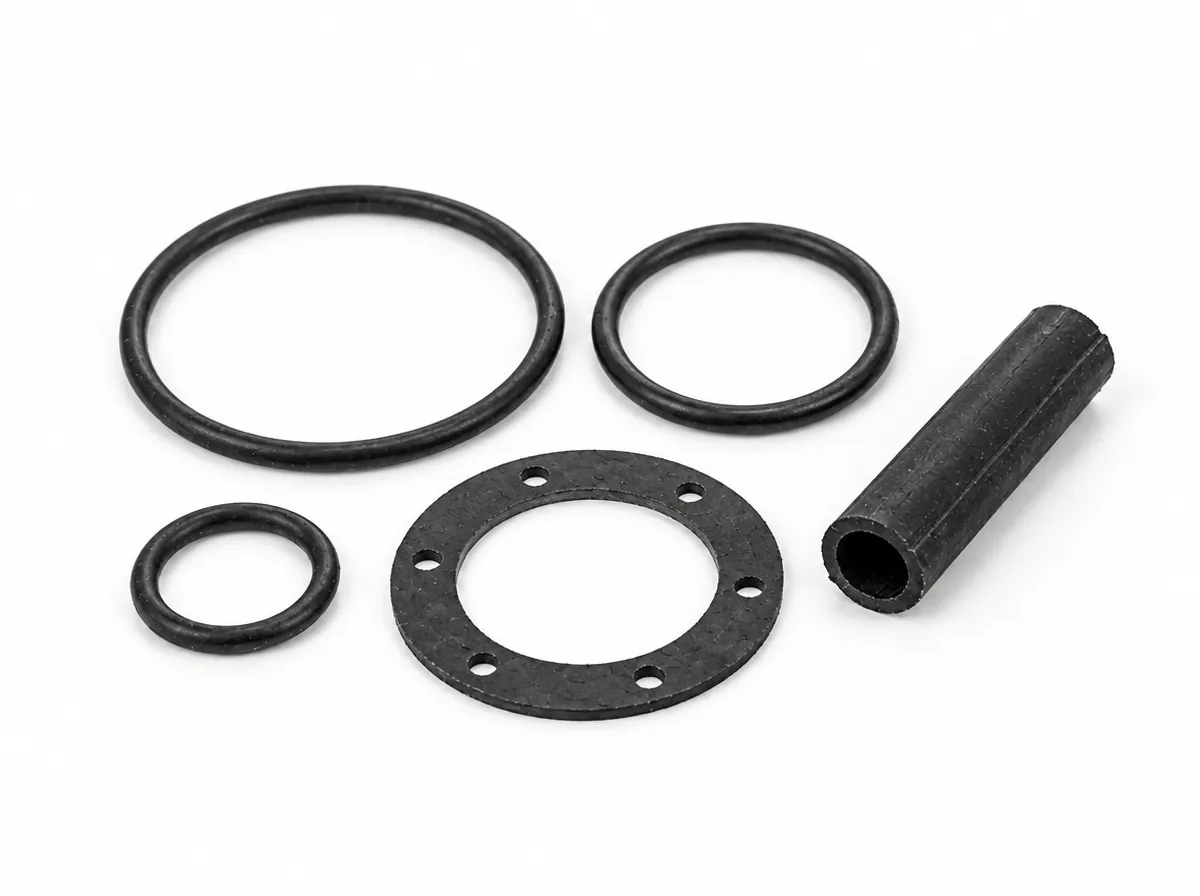
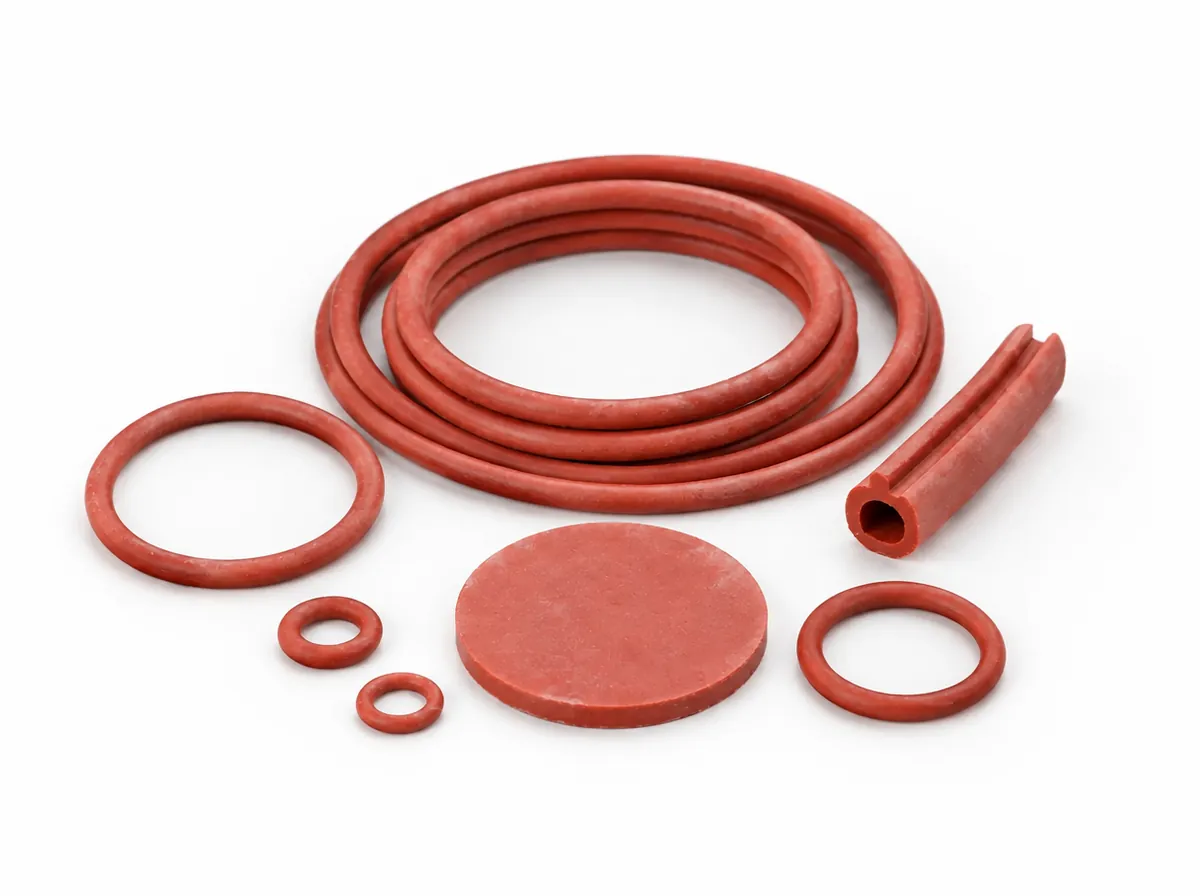
EPDM (ethylene propylene diene rubber) is a synthetic elastomer (rubber) that is characterised above all by its elasticity and weather resistance:
-
Temperature resistance: EPDM is suitable for a temperature range of -40 °C to 150 °C and ideal for applications with moderate to high thermal loads.
-
Outstanding ozone and UV resistance: EPDM remains extensible and dimensionally stable even with long-term exposure to weathering.
-
High elasticity: EPDM retains its flexibility over a wide temperature range and offers good resilience.
-
Chemical resistance: EPDM withstands alcohols, ketones and inorganic acids, but is not resistant to oils, greases and hydrocarbons.
-
Resistance to water and steam: EPDM is preferred especially in sanitary technology because of its resistance to hot water and steam.
-
Resistant to seawater: Thanks to this positive property, EPDM is very often used in shipbuilding and in various ship installations.
Technical differences compared
| Property | Graphite | EPDM |
|---|---|---|
| Maximum operating temperature | Up to 1000 °C in sealing applications | Up to 150 °C (peroxide-cured) |
| Chemical resistance | Excellent (acids, alkalis, solvents) | Limited (not resistant to oils) |
| Weather resistance | Limited | Excellent (ozone, UV, weathering, moisture) |
| Flexibility | High | Very high |
| Applications | High-temperature environments, chemical industry | Sanitary technology, steam lines, outdoor applications, shipbuilding and much more |
Conclusion
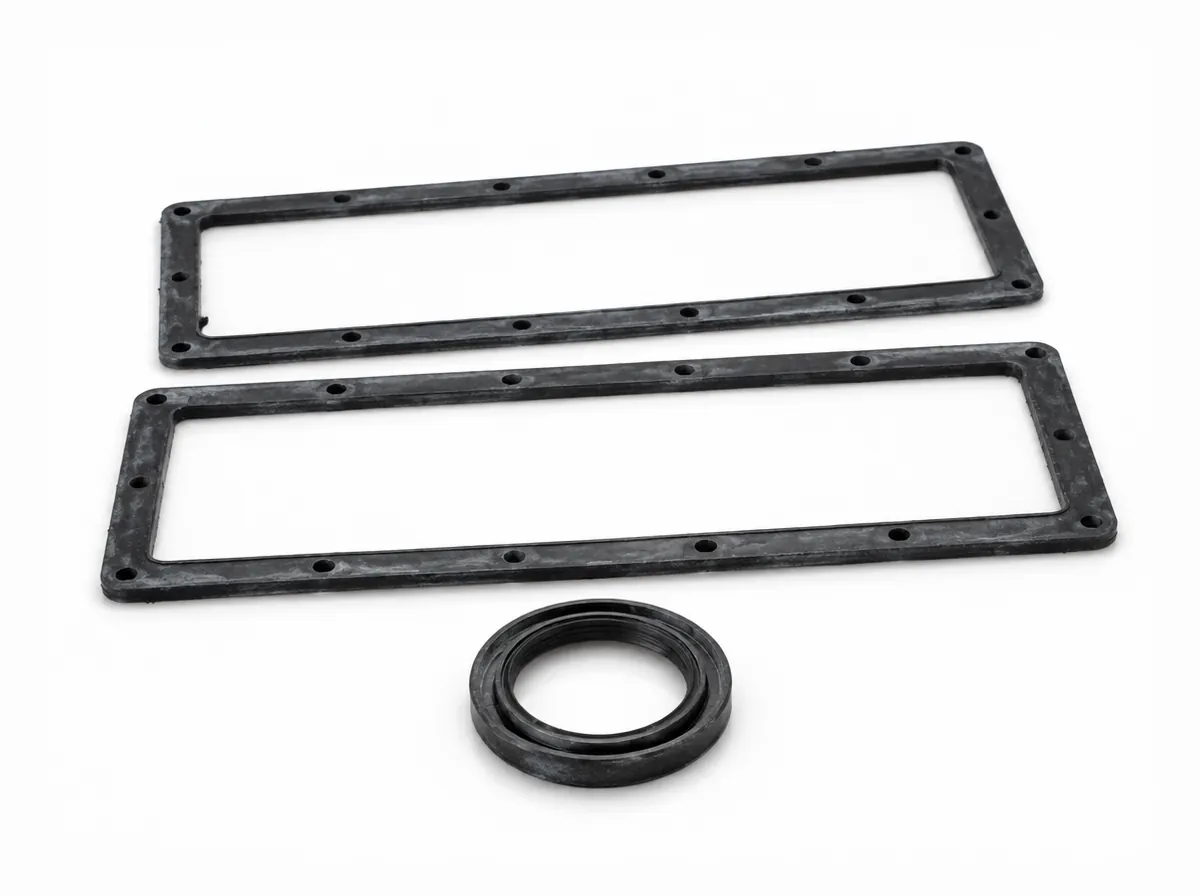
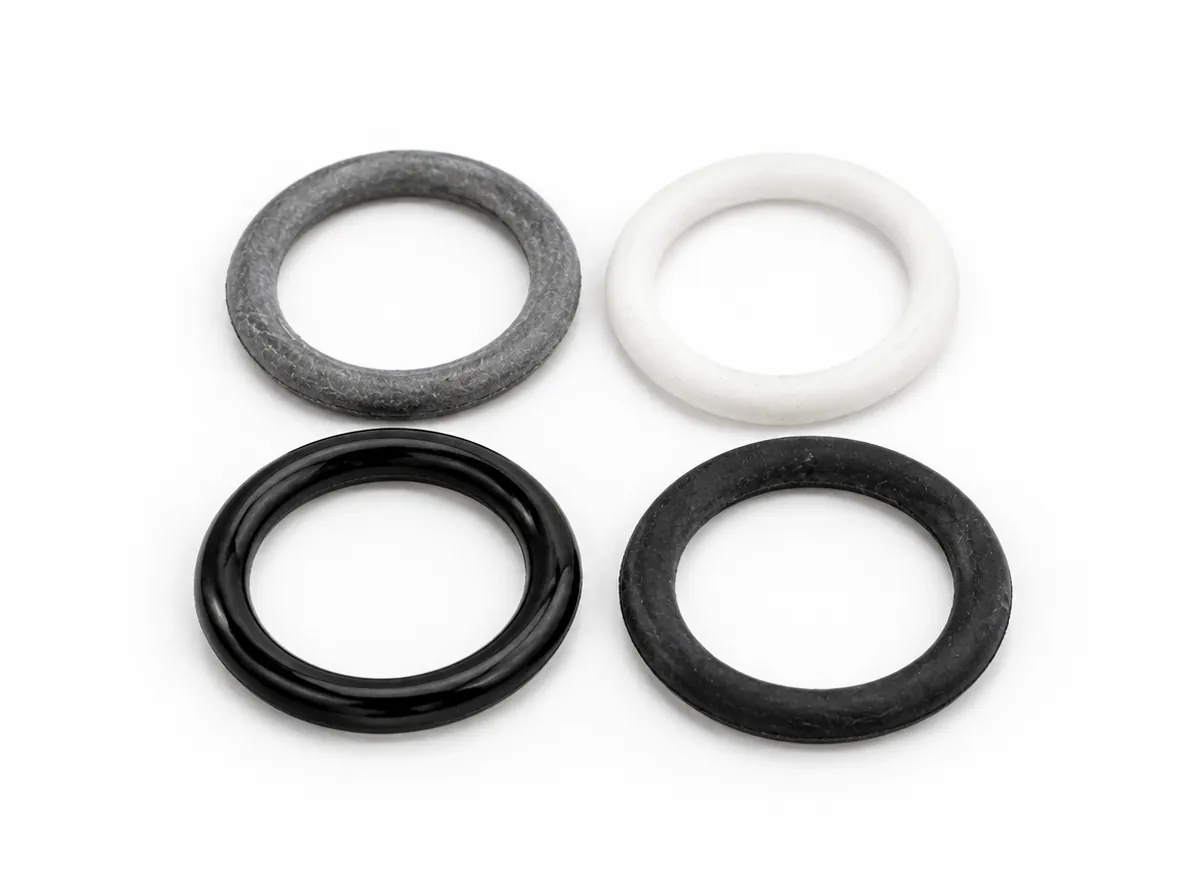
The choice between graphite and EPDM flat seals depends heavily on the specific requirements of the application. While graphite impresses with its enormous heat resistance and chemical stability, EPDM scores with its elasticity (even in the cold), its resistance to UV, ozone and weathering, and, in sanitary applications, with various standards and approvals such as KTW-BWGL, DVGW, EN 16421, WRAS and others.