

















Glossary of elastomer processing
Release agent
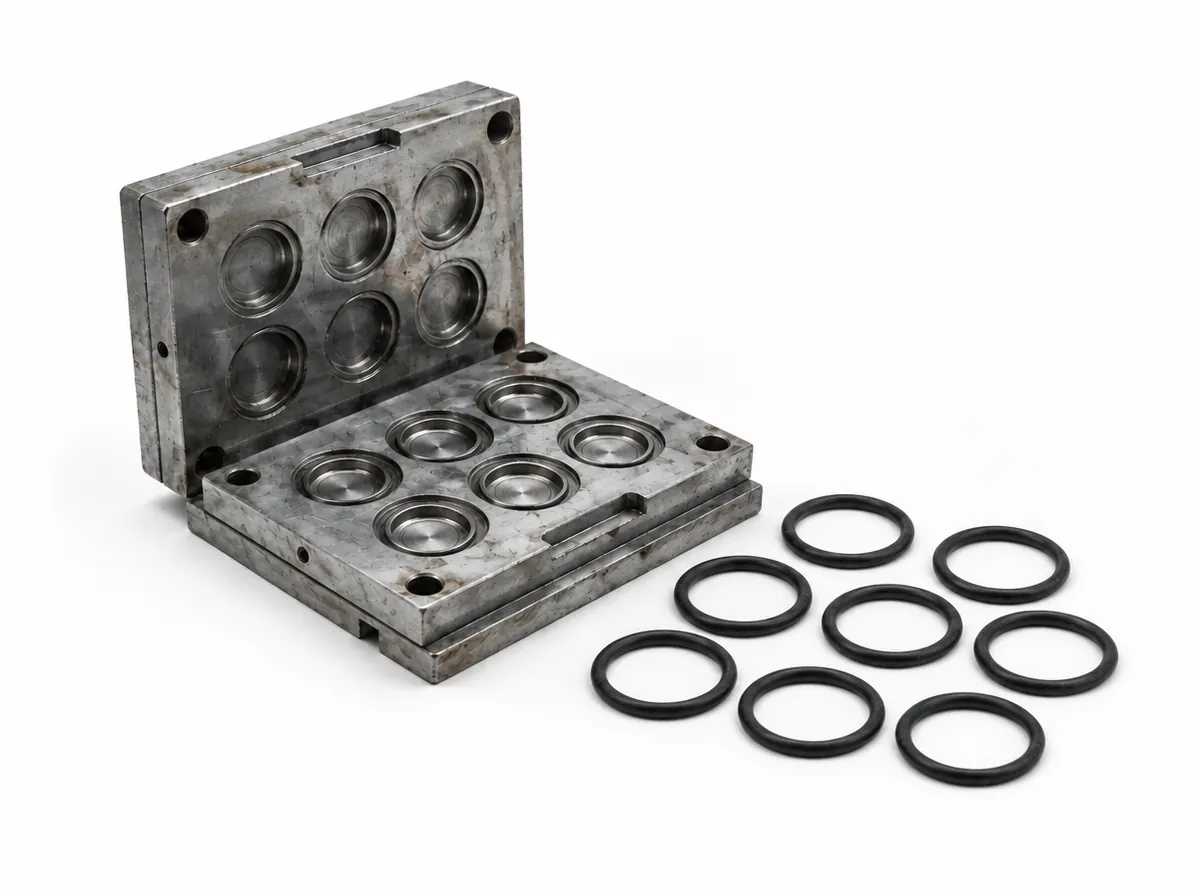
Release agents are substances used to prevent materials from sticking to surfaces or moulds (cavities) during processing. They create a thin separating layer that makes it easier to demould components, reduces tool wear and improves the quality of the end products. Release agents play an important role in elastomer processing.
Release agents perform several important functions:
-
Preventing adhesion: they prevent materials from sticking to moulds or tools.
-
Increasing productivity: easier demoulding shortens cycle times.
-
Improving product quality: smooth surfaces without residues or defects.
-
Protecting tools: release agents reduce mould wear and extend mould life.
Important properties of release agents are:
-
Heat resistance
-
Low residue formation
-
Chemical stability
-
Easy application
Release agents are divided into different categories depending on the application and material:
| Type | Properties | Typical applications |
|---|---|---|
| Silicone-based release agents | Excellent slip and non-stick properties, heat-resistant | Injection moulding, die casting |
| Water-based release agents | Environmentally friendly, easy to wash off | Food industry, rubber manufacturing |
| Wax-based release agents | Long-lasting, for heavy-duty applications | Foundries, compression moulding |
| PTFE-based release agents | Excellent non-stick properties, chemically resistant | High-temperature applications, engineering plastics |
| Residue-free release agents | Leave no residue, ideal for sensitive components | Electronics, medical devices |
Release agents are used in numerous industries:
Plastics industry
-
Injection moulding: prevent plastic parts from sticking to the moulds.
-
Extrusion: support in the processing of thermoplastics.
Rubber industry
-
Mould vulcanisation: easy removal of vulcanisates from the moulds.
-
Extrusion: reduced friction and improved material quality.
Composites and fibre-reinforced materials
- Resin and glass fibre processing: easy release of workpieces from the moulds.
Release agents offer numerous advantages:
-
Efficiency: fast demoulding and less scrap.
-
Product quality: smooth, residue-free surfaces.
-
Longer tool life: reduced wear and protection against corrosion.
-
Versatility: adaptable to different materials and processes.
Using release agents can also involve challenges:
-
Residues: unsuitable release agents can leave residues on components that require rework.
-
Compatibility: choosing the right release agent is crucial for the function and quality of the end product.
-
Environmental aspects: solvent-based release agents can pose environmental and health risks.
-
Which release agents are environmentally friendly? Water-based release agents are particularly environmentally friendly, as they contain no harmful solvents.
-
How do I choose the right release agent? The choice depends on factors such as material, temperature and the desired end result.
-
Can release agents affect the surface of the product? Yes, unsuitable release agents can leave residues or change the surface.
-
How often should release agent be applied? This depends on the process. Some release agents have to be applied before every cycle, others offer long-term protection.
Release agents are essential additives in industrial production that ensure efficient demoulding, high product yield and long-term protection of tools. By choosing and applying the right release agent, production processes can be optimised and the quality of end products improved. Despite some challenges, release agents are an indispensable part of modern manufacturing technology.
Questions about this term?
Our technical advice
Do you have a specific application or a question about elastomer processing? Talk to us, we will help you with material, process and approval.